
Why seasonal checks matter for your budget
Home repairs follow a predictable pattern: small issues ignored through one season become mid-size problems by the next, and structural or system failures by the third. Water intrusion from a clogged gutter, for example, can progress from a minor fascia stain to wood rot and interior ceiling damage within a year or two. Catching it early costs a few hours and a ladder rental. Catching it late can mean thousands in contractor work.
If you want to understand what deferred maintenance typically costs compared with staying current, the hidden costs of skipping routine upkeep article breaks down common scenarios with realistic figures. For those new to ownership, the plain-language introduction to home maintenance explains which tasks are genuinely DIY-friendly and when a licensed trade is the right call.
This checklist is organized by season. Work through it at the start of each season, set aside a weekend for the hands-on items, and note anything that needs a professional. That habit alone separates homeowners who stay ahead of their houses from those who spend reactively.
Electrical, gas, and structural work: call a professional
This checklist covers inspection and basic maintenance tasks a typical homeowner can handle safely. Tasks involving gas lines, the electrical panel, structural repairs, or work requiring a permit must be done by a licensed, qualified contractor. Many jurisdictions require inspections for certain repairs; check your local building department before starting any work beyond routine maintenance.
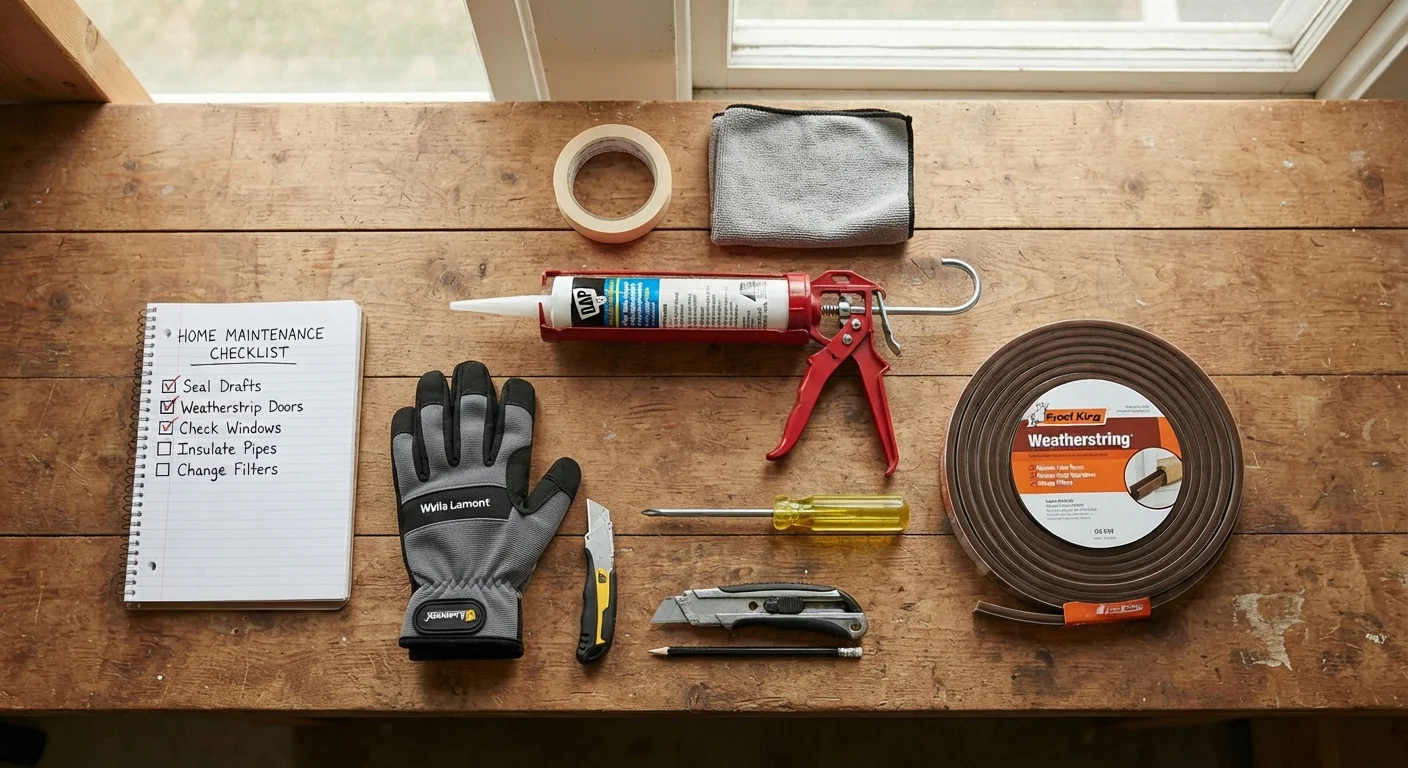
Tools and supplies to keep on hand
Most seasonal tasks require only a small set of tools. Buying tools you use once a year rarely makes financial sense; consider renting specialty items instead. The renting vs. buying tools guide walks through which items are worth owning and which are not.
Caulk gun and caulk
Sealing gaps around windows, doors, and exterior penetrations is one of the highest-return tasks on this list.
Weatherstripping
Replacing worn door weatherstripping stops conditioned air from leaking and is one of the quickest energy-saving repairs.
Extension ladder
Needed for gutter cleaning and basic roof-edge inspections; consider renting rather than buying if used only twice a year.
HVAC filters (spare set)
Keeping a few replacement filters on hand removes the excuse to delay a monthly or quarterly swap.
Flashlight or headlamp
Essential for inspecting attics, crawl spaces, and under-sink areas where visibility is limited.
Voltage tester (non-contact)
Confirms a circuit is de-energized before adding foam gaskets to outlet covers on exterior walls.
Gutter scoop or garden trowel
Removes compacted leaf debris from gutters faster and more safely than using bare hands.
Garden hose with spray nozzle
Used to rinse condenser coils on the outdoor AC unit and to test sump pump activation.
The seasonal checklist
Work through these groups at the start of each season. Items marked "must" are non-negotiable for protecting the home's structure or systems. "Should" items prevent foreseeable problems. "Nice to have" items improve comfort or efficiency but can wait if the budget is tight.
For air-sealing tasks that appear across multiple seasons, the weekend caulking and weatherstripping guide gives step-by-step detail on how to do the work correctly the first time.
Spring
Summer
Fall
Winter
Before any season's exterior painting or patching, review common DIY exterior painting mistakes to avoid preparation errors that lead to early failures and repaints.
Staying on budget while working through the list
Batch similar tasks together. Buying caulk, weatherstripping, and foam backer rod in one trip costs less than three separate hardware runs. If a task on the list reveals a larger issue, get written estimates from at least two licensed contractors before committing. Do not let urgency pressure you into the first quote you receive.
Folding maintenance costs into your monthly household budget prevents the sticker shock of an unplanned repair. The monthly household finance checklist has a section on irregular upcoming expenses that works well for scheduling seasonal home costs. More broadly, the Family Finance Basics hub covers foundational habits that make irregular spending easier to absorb.
Some homeowners also find it useful to track which tasks they completed and what they spent, season by season. A simple notebook or spreadsheet works. That record helps you spot patterns, such as a roof flashing that needs re-sealing every two years, and plan ahead rather than react.
Finally, be honest about your skill level. The myths about DIY home repair article addresses the common belief that attempting any task yourself always saves money, which is not always true when mistakes require professional correction.