
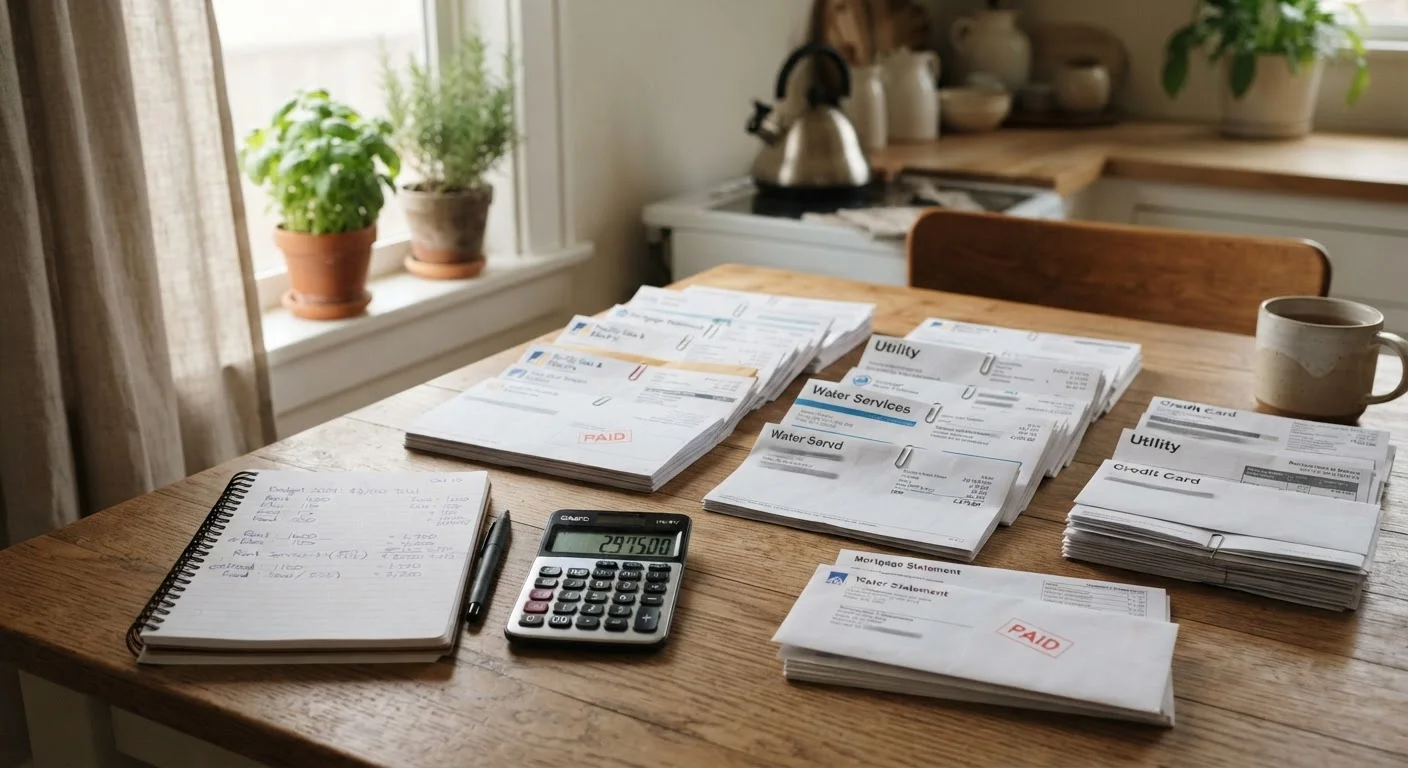
Why a monthly reset matters
Most household budget problems do not start with one big mistake. They build from small, unnoticed patterns: a subscription that renewed quietly, a bill that crept up, a savings transfer that got skipped because the month got busy. A short monthly review interrupts those patterns before they become expensive habits.
This checklist is general financial information to help you build a review routine. It is not personalized financial advice. For questions about your specific situation, a licensed financial professional can give guidance tailored to your household.
If you have noticed that your savings do not grow even when your income does, the reasons may be more common than you think. This checklist addresses many of the same patterns.
What you need before you start
Gather the following before working through the checklist. Having everything in one place cuts the time in half.
Bank and credit card statements
Needed to verify all transactions and confirm payment amounts for the current month.
Spending tracker or spreadsheet
Used to categorize and total spending across the month for comparison.
List of recurring bills and due dates
Lets you confirm everything was paid on time and flag any amounts that changed.
Savings and retirement account access
Needed to verify contributions posted and check current balances against your goals.
Annual irregular expense list
A running document of non-monthly costs (fees, premiums, seasonal expenses) used to plan ahead.
The monthly money reset checklist
Work through each group in order. The groups build on each other: you need your actual spending numbers before you can assess your savings, and you need both before you can plan for next month.
Bill and account review
Spending review
Savings and contributions
Upcoming irregular expenses
Next month planning
Confirm, do not assume
Automatic transfers and recurring payments fail more often than most people expect. A missed savings transfer or an unexpected fee can sit unnoticed for months. Always verify that planned transactions actually posted rather than assuming they went through. This single habit prevents most of the surprises that derail household budgets.
Planning for irregular expenses
Most monthly budget shortfalls come from costs that were predictable but not planned for. Car registration, school supplies, holiday gifts, annual insurance premiums, and seasonal home maintenance all arrive on a schedule. The fix is to list them once, estimate their cost, divide by 12, and set that amount aside each month.
The seasonal home maintenance checklist is a practical starting point for identifying which home costs to add to your irregular expense list. If you have pets, the costs covered in the pet budget readiness checklist belong on that list too.
Once your monthly reset becomes routine, pairing it with a broader financial habit system helps it stick. The guide to building a family financial routine covers how to structure those habits across the year.
This article is for general informational and educational purposes only and does not constitute personalized financial, tax, or legal advice. Consult a qualified financial professional before making decisions based on your household's specific circumstances.