
Why small habits matter more than single big decisions
Most families focus on the purchase price when thinking about vehicle costs, but the daily choices made during ownership often determine how much a car actually costs over time. Transportation is one of the largest line items in a household budget, and the gap between a vehicle that costs a family $8,000 a year versus $11,000 rarely comes down to which car they bought. It comes down to how they operate and maintain it.
The full cost of car ownership includes fuel, insurance, maintenance, repairs, and depreciation, all of which are influenced by owner behavior. The good news is that the habits described below require little time and no special tools. They compound quietly over months and years into real dollar savings.
Core habits that protect your vehicle and your wallet
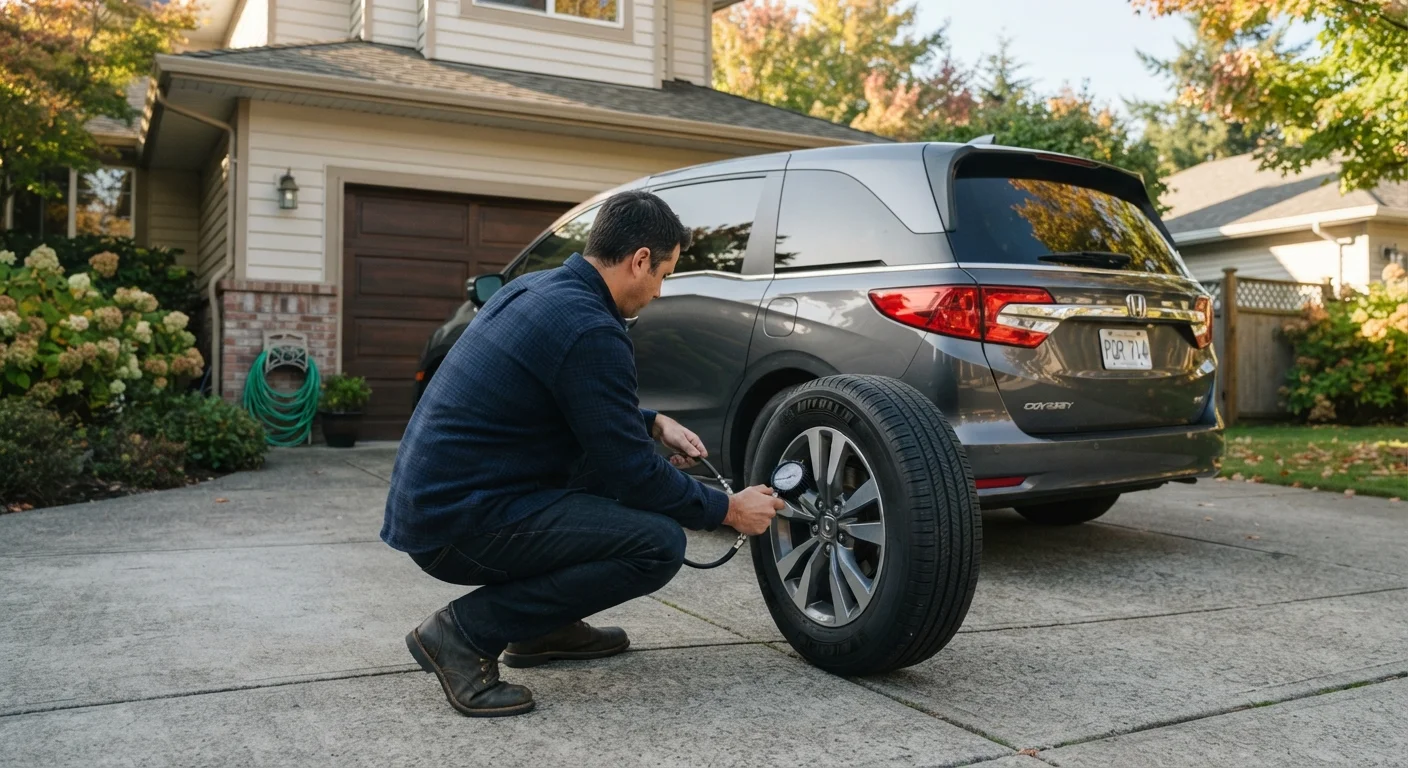
Check tire pressure every month and before any long trip
Underinflated tires increase rolling resistance, which forces the engine to work harder and burn more fuel. They also wear unevenly, shortening tire life and potentially requiring early replacement.
Follow your owner's manual maintenance schedule, not the oil-change shop's sticker
Many quick-lube services recommend oil changes every 3,000 miles, but most modern vehicles with synthetic oil can go 5,000 to 10,000 miles between changes per the manufacturer's specification. Following the actual schedule avoids unnecessary service costs without risking engine health.
Inspect and rotate tires on the schedule your manual specifies
Rotation distributes wear evenly across all four tires, extending the full set's usable life. Uneven wear caused by skipped rotations often means replacing two tires early rather than a full set at the normal interval.
Replace cabin and engine air filters at the intervals your manual specifies
A clogged engine air filter can reduce fuel economy and, over time, affect engine performance. Cabin filters affect interior air quality and HVAC system efficiency. Both are inexpensive to replace as a DIY task on most vehicles.
Plan and consolidate errands to reduce cold-start trips
Short trips, particularly those under five miles, are harder on engines than longer sustained drives because the engine does not fully warm up. Cold starts also use more fuel per mile than warmed-up operation.
Review auto insurance coverage annually as the vehicle's value changes
Comprehensive and collision premiums stay relatively fixed even as a vehicle depreciates, meaning you may pay more each year for coverage whose payout ceiling is shrinking. Annual review lets you adjust deductibles or drop coverage that no longer makes financial sense.
For a closer look at how skipping any of these maintenance steps plays out financially, the comparison between scheduled maintenance and reactive repairs shows how the numbers stack up over five years.
Driving behavior and its direct cost
How a vehicle is driven affects fuel consumption and how quickly components wear out. Hard acceleration burns more fuel and strains the drivetrain. Harsh braking wears brake pads faster than gradual deceleration. Carrying unnecessary weight, such as equipment or cargo left in the trunk year-round, reduces fuel economy on every trip.
Highway speed is another factor. Fuel consumption rises significantly above 50 mph on most vehicles. The U.S. Department of Energy notes that each 5 mph driven above 50 mph is roughly equivalent to paying an additional $0.18 to $0.30 per gallon of gas, depending on fuel prices. On a long commute or road trip, that adds up. See what to check before a long family road trip for a practical pre-trip routine that also helps fuel efficiency.
Many common assumptions about fuel-saving techniques are also worth reviewing. The fuel economy myths costing families at the pump covers which popular ideas actually work and which ones waste time or money.
Insurance and financial habits that reduce total ownership cost
Vehicle insurance premiums are a fixed cost that many families set and forget. Reviewing coverage once a year takes less than an hour and can reveal meaningful savings. As a car ages and its market value drops, carrying comprehensive and collision coverage at the same level as when the car was new may cost more than the coverage pays out in a claim. Adjusting deductibles in line with what a household could comfortably pay out of pocket is another way to reduce monthly premiums without taking on significant risk.
Bundling home and auto policies with one insurer often produces a discount, as does completing a defensive driving course recognized by your insurer. These are general considerations; a licensed insurance professional can review your specific situation and coverage needs.
Avoiding patterns that trap families in high costs is equally important. How families get locked into expensive car ownership cycles outlines how trading up too soon and rolling negative equity quietly drain budgets over time. Treating a vehicle as a long-term asset rather than a status item is one of the most effective financial choices an owner can make. Depreciation is often the largest single ownership cost, and understanding how depreciation accelerates helps families time replacements more strategically.
This article provides general information about vehicle ownership costs and habits. It is not financial, insurance, or mechanical advice. Consult a licensed professional for guidance specific to your situation and vehicle.