
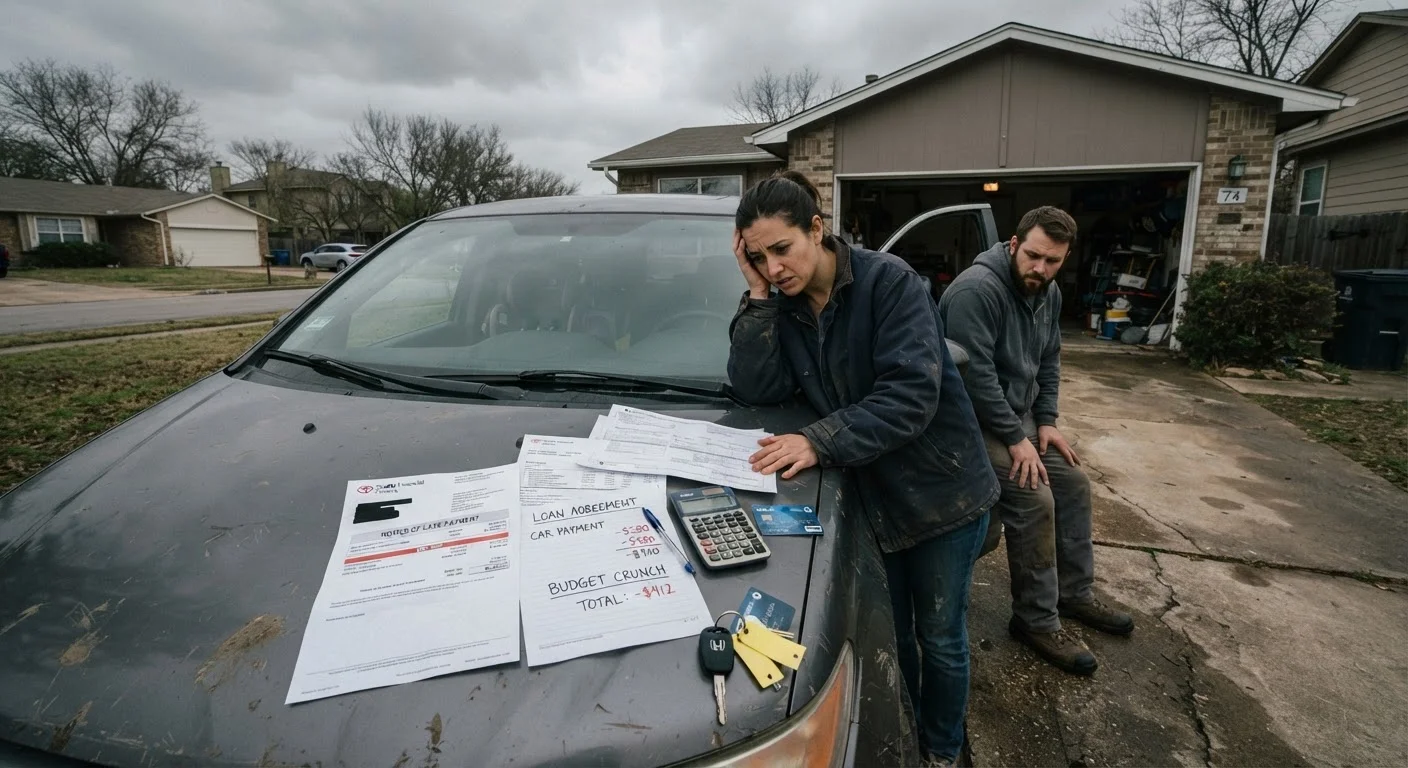
Why the cycle starts with a single bad trade-in
Most families enter the expensive ownership cycle not through recklessness, but through a reasonable-sounding decision: trading in a vehicle before the loan is paid off. When the outstanding loan balance exceeds the car's current market value, the gap is called negative equity. Dealers routinely roll that gap into the new loan, so the family immediately owes more on the new car than it is worth. Each subsequent trade-in compounds the problem.
The pattern fits a broader theme of lifestyle creep that quietly drains household budgets. Income growth alone does not break the cycle: the payment stays manageable, so the structural problem stays invisible.
Rolling negative equity into the next loan rather than paying it down first.
Why it happens: Dealers present the rolled balance as a minor adjustment to the monthly payment, making the true cost easy to overlook.
Focusing on the monthly payment rather than the total loan cost.
Why it happens: Stretching the term to reach a comfortable payment feels like smart budgeting, but it obscures the total interest paid over the life of the loan.
Trading in a vehicle before depreciation slows, typically in the first three years.
Why it happens: New model releases and minor dissatisfactions make trading feel like a reasonable upgrade, but the timing maximizes equity loss.
Carrying the same insurance coverage for years without reviewing whether it still matches the vehicle's value.
Why it happens: Auto-pay and renewal notices make it easy to let coverage renew unchanged, even as the car depreciates.
Deferring routine maintenance to save money in the short term.
Why it happens: Maintenance feels optional when the car is running normally, and the immediate cost is visible while the future repair cost is not.
Understanding how auto loan debt differs from other household debt matters here. Unlike a mortgage on an appreciating asset, an auto loan is secured by something that loses value from the first day of ownership. That asymmetry makes rolling balances forward especially costly.
The hidden math of monthly payment shopping
Focusing only on the monthly payment is the single most common error families make at the dealership. A lower payment achieved by stretching a loan to 72 or 84 months means paying substantially more in total interest, and it lengthens the period of negative equity. By month 36 of an 84-month loan, many families still owe significantly more than the vehicle is worth.
~38%
Share of trade-ins with negative equity
Automotive market data from Edmunds has periodically shown that roughly a third to two-fifths of vehicle trade-ins carry negative equity, meaning the owner owes more than the car is worth.
84 months
Longest common auto loan term now offered
Seven-year loan terms have become widely available at U.S. dealerships, extending the period during which most borrowers remain underwater on the loan.
$1,000+
Potential annual savings from coverage review
Insurance industry consumer guidance consistently notes that policyholders who compare rates and adjust coverage for vehicle age can identify meaningful savings, though actual amounts vary by state and driver profile.
The same logic applies to insurance. Families who do not review their coverage annually often carry comprehensive and collision on vehicles whose market value no longer justifies the premium. On a car worth less than ten times the annual cost of those coverages, most financial guidance suggests reconsidering them, though individual circumstances vary. Consulting a licensed insurance professional before making changes is the appropriate step.
For a broader picture of habits that reduce transportation costs over time, see ownership habits that add up to real savings.
Making the decision to hold, not trade
The financial case for holding a paid-off vehicle is straightforward. Once the loan is retired, the monthly cash previously used for payments can go toward savings, maintenance, or other household priorities. Depreciation also slows considerably after the first few years of a vehicle's life, meaning the owner retains more value per year of continued use.
Families weighing a used vehicle purchase as part of this strategy should review the financial trade-offs that come with used car ownership. Pre-purchase inspections, vehicle history reports, and an honest accounting of likely repair costs are the tools that make a used vehicle genuinely cost-effective rather than just nominally cheaper.
A paid-off, well-maintained vehicle also reduces per-mile transportation costs on long trips. Planning a family road trip on a tight budget becomes far more practical when the vehicle has no monthly payment attached to it. Routine maintenance, including oil changes, tire rotations, and brake inspections, preserves that advantage by preventing the large repair bills that prompt premature trades.
This article is for general informational purposes only and does not constitute financial, legal, or insurance advice. Consult a licensed financial adviser or insurance professional for guidance specific to your situation.