
Why the used vs. new question matters more than most families realize
The purchase price of a vehicle is only the opening number in a much longer financial story. Depreciation, interest, insurance, and maintenance costs all accumulate for years after the sale, and whether you bought new or used shapes each of those figures in different ways. For a household trying to make transportation affordable, understanding those downstream effects is at least as important as negotiating the sticker price.
For a fuller picture of what vehicle ownership actually costs over time, see the true cost of owning a car. This article focuses specifically on the trade-offs that apply once you have decided to consider used vehicles.
Avoids the steepest phase of depreciation
New vehicles can lose 15% to 25% of their value in the first year. Buying a vehicle that is two to four years old means a previous owner absorbed that loss, not you.
Lower purchase price reduces loan size
A smaller principal means lower monthly payments and less total interest paid, even accounting for the higher rates lenders charge on used vehicle loans.
Insurance costs are generally lower
Older vehicles carry lower comprehensive and collision premiums, and many families choose to drop that coverage once the car's market value falls below a meaningful threshold.
Registration fees decrease with vehicle age
Most states calculate registration fees based on the vehicle's value or age, so an older car costs less to register each year.
Wider selection at any given price point
A $20,000 budget buys far more vehicle in the used market than the new one, including models with more features or a larger size class than a comparable new purchase would allow.
The financial case for buying used
New vehicles lose a significant portion of their value in the first two to three years of ownership. A family that buys a vehicle at that point in its life cycle avoids absorbing that loss while still driving a relatively modern car. That single factor drives most of the financial appeal of the used market.
Insurance premiums are generally lower on older vehicles, particularly if you drop comprehensive and collision coverage on a car whose market value no longer justifies the cost. Registration fees in most states also decrease with vehicle age. These are recurring savings, not one-time wins.
~20%
Average new-car value lost in year one
Depreciation estimates from automotive valuation sources consistently show new vehicles losing roughly 15% to 25% of their value within the first 12 months of ownership.
2-4 pts
Extra interest rate on used vs. new loans
Consumer financial data shows used vehicle loan rates commonly run 2 to 4 percentage points above new-vehicle rates from the same lender, reflecting higher collateral risk.
Loan amounts on used vehicles are smaller, which means monthly payments are lower even when interest rates are higher. A family that keeps the loan term short and puts a meaningful down payment forward can often pay off a used vehicle well before they would finish paying off a comparable new one.
The financial risks families often underestimate
A used vehicle comes with an ownership history you did not witness. Deferred maintenance, unreported accidents, and hard use all show up eventually, usually as repair bills. Unlike a new car, a used vehicle typically carries no factory warranty beyond whatever remains on powertrain coverage, and many older vehicles have none at all.
Unknown ownership and maintenance history
Even a vehicle history report cannot capture all deferred maintenance or abuse. Problems that previous owners ignored become the new owner's repair bills.
Higher financing interest rates
Lenders typically charge 2 to 4 percentage points more for used vehicle loans than for new ones, which can meaningfully increase the total amount paid over the life of the loan.
Limited or no warranty coverage
Most used vehicles are sold as-is or with a short dealer warranty. Costly repairs to the engine, transmission, or other major systems fall entirely on the owner.
Repair costs are harder to predict
Parts availability, labor rates, and the condition of wear items vary significantly by make, model, and mileage. Budgeting for repairs requires more guesswork than new-car ownership.
Older safety technology
Vehicles more than five years old may lack features now standard on new cars, such as automatic emergency braking or blind-spot monitoring, which have measurable effects on crash rates.
Financing is another friction point. Lenders charge higher interest rates on used vehicles because the collateral is worth less and depreciates faster. A family that finances a used car at a significantly higher rate than a new-car buyer pays may partially erase the price advantage, depending on the loan term they choose.
Fuel economy also tends to decline with vehicle age, and older emissions systems are less efficient. The gap is narrowing as newer used vehicles age into the market, but it is worth checking the specific model's efficiency figures rather than assuming savings at the pump.
What to do before buying to protect yourself financially
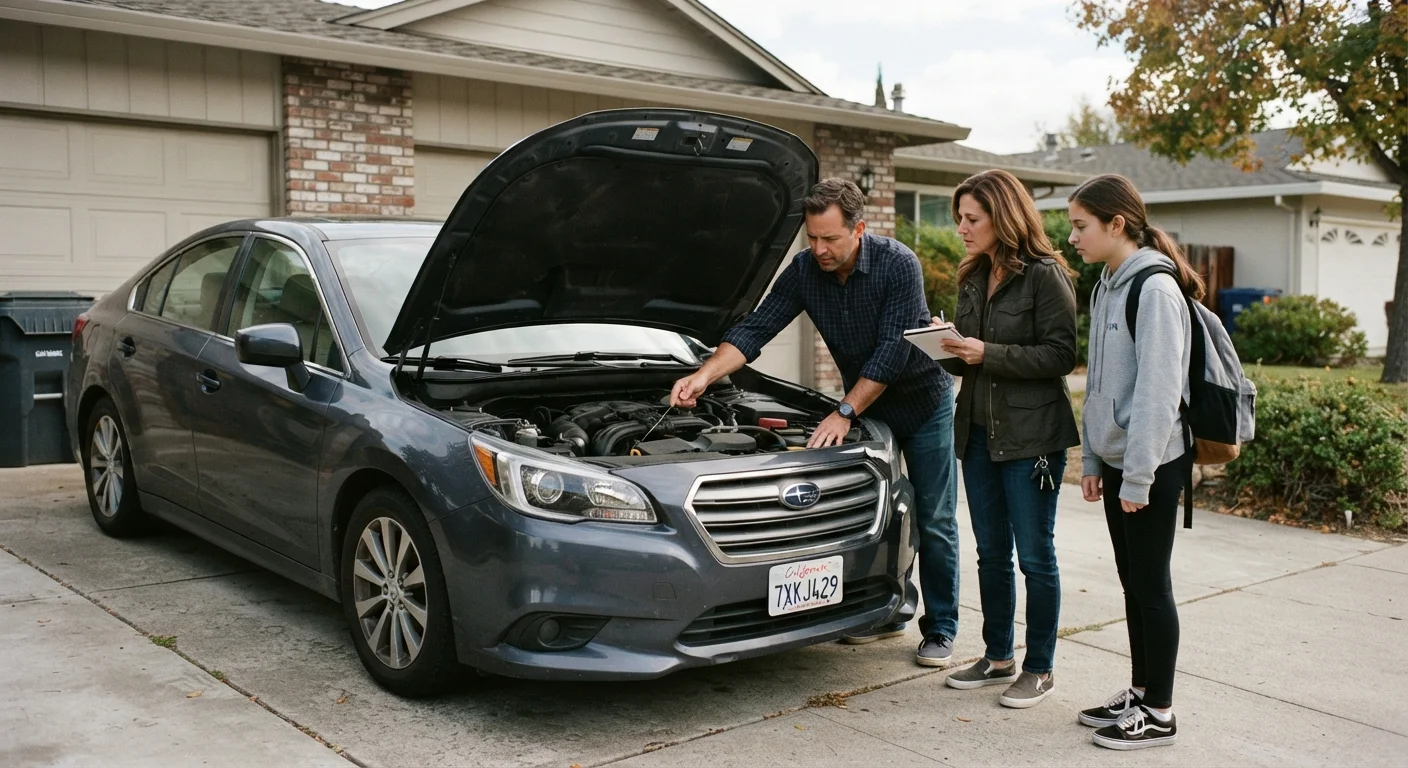
The single most effective step is an independent pre-purchase inspection by a mechanic who has no stake in the sale. This typically costs between $100 and $200 and can surface problems that would cost far more to fix. A vehicle history report is useful but not sufficient on its own; it will not catch deferred maintenance or gradual mechanical wear.
What a pre-purchase inspection covers
An independent mechanic's inspection typically includes a visual check of the engine, transmission, brakes, suspension, tires, and undercarriage, along with a diagnostic scan for stored fault codes. The inspector is not predicting future reliability, but identifying existing problems or patterns of wear. Budget for the inspection fee as a fixed cost of the buying process, regardless of whether you proceed with that particular vehicle.
Budget for the first year of ownership as if repairs are likely, because they often are. A common rule of thumb among mechanics is to set aside 1% to 2% of the vehicle's purchase price per year for maintenance and unexpected repairs, though actual costs vary widely by make, model, age, and mileage. Families that treat that reserve as fixed are less likely to be financially destabilized when something breaks.
Trading vehicles too often to avoid repair bills tends to cost more than fixing problems. Expensive car ownership cycles often start exactly there: a family sells a vehicle at a loss the moment it needs work, rolls the remaining debt into a new loan, and repeats the pattern. Consistent ownership habits, covered in more detail at vehicle ownership habits that add up to real savings, are the practical counterweight to that cycle.