
Why road trips can cost more than families expect
A road trip looks affordable on paper: no flights, no airport fees, no rental cars. In practice, fuel costs for a large vehicle, multiple restaurant stops, and last-minute lodging can push the total well above what a family budgeted. The gap between estimated and actual spending usually comes from three places: underestimating fuel consumption, eating out every meal, and not accounting for the hidden days added by longer routes.
Before planning any route, read through the core concepts for family travel budgeting to understand how fixed costs (like lodging reservations you cannot cancel) differ from flexible ones (like food). That distinction shapes every decision in the steps below.
Also consider timing. Traveling off-peak can lower lodging rates noticeably, though it comes with real trade-offs around weather and attraction availability that are worth weighing honestly.
Step-by-step: planning a road trip your budget can handle
The steps below cover route selection, cost estimation, vehicle prep, and daily spending control. Work through them in order before booking anything.
Set a total trip budget before choosing a destination
Write down the maximum dollar amount your family can spend on the entire trip, including a contingency of at least 10 percent for unexpected costs. Only then choose a destination that fits that number. Many families do this in reverse and then struggle to make the math work after they are already committed.
Separate your budget into four buckets: fuel, lodging, food, and activities. Assign a realistic ceiling to each based on your vehicle's fuel economy, the number of nights you plan to be away, and your family's typical daily food spend.
Map the route with cost, not scenery, as the first filter
Plot two or three possible routes and compare total miles, estimated fuel cost, and the number of overnight stops each requires. A scenic detour that adds 200 miles can mean an extra tank of gas and an extra night of lodging, which may not be worth it when budgets are tight.
Identify the midpoints where you will need to stop overnight. Check lodging options at those points now, not at 9 p.m. when you are already tired. Last-minute bookings on a Friday in a popular corridor are consistently more expensive than reservations made a few weeks out.
Prepare your vehicle before departure
A breakdown on the road can cost more than the entire lodging budget for the trip. Check tire pressure and tread, engine oil, coolant, brake fluid, and windshield wipers before you leave. Make sure your spare tire is inflated and accessible.
For a thorough pre-departure checklist, see everything to check before a long family road trip. If your vehicle is due for an oil change or has a warning light on, resolve it before you go, not after you have already driven 400 miles.
Pack food and supplies to reduce daily spending
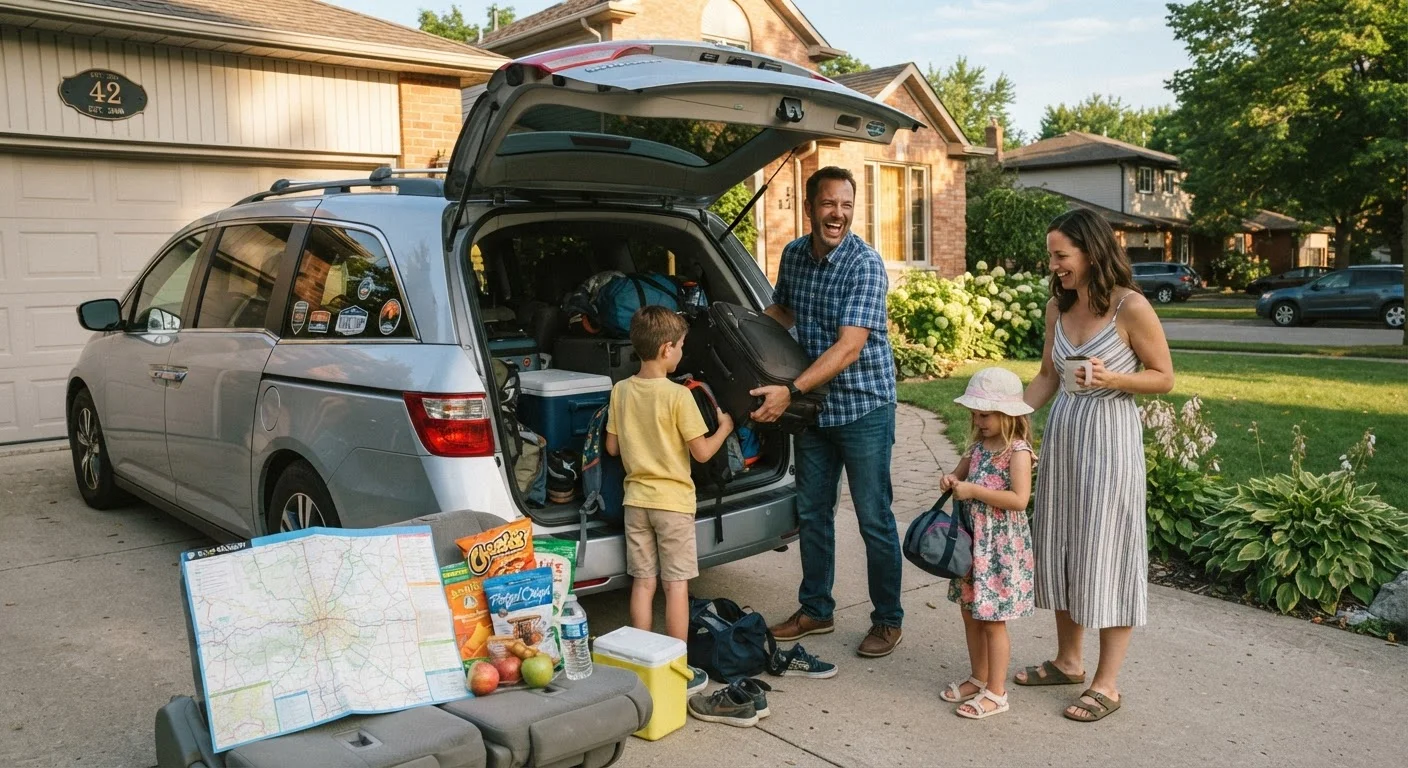
Load a cooler with enough food for breakfasts and lunches for the full trip. Include snacks specifically to reduce gas station impulse purchases, which add up fast with children in the car. Reusable water bottles eliminate the cost of buying drinks at every stop.
Stock a small bag with common first-aid items, sunscreen, and any medications your family uses. Buying these on the road at tourist-area prices costs significantly more than bringing them from home.
Build a day-by-day spending log and track it in real time
Use a simple spreadsheet or a notes app to record every expense as it happens. Compare your actual daily spend against your budget each evening. If you overspent on fuel one day because of a detour, you know immediately and can compensate by eating from the cooler the next day instead of stopping at a restaurant.
This kind of real-time tracking is more useful than a post-trip review, because you still have time to adjust. Families who skip this step often return home surprised by how much they spent.
National park passes can cut activity costs
The America the Beautiful annual pass covers entrance fees at most federal lands for one year. If your route passes through two or more national parks or monuments, the pass can pay for itself on a single trip. Verify current pricing and coverage at nps.gov before purchasing.
Keeping costs in check once you are on the road
Planning gets you to the start line. Discipline on the road keeps the budget intact. The two categories that tend to slip are food and detours.
For food, a cooler stocked at a grocery store before departure typically costs a fraction of equivalent restaurant meals for a family of four. Plan one sit-down meal per day if the budget allows, and cover breakfast and lunch from the cooler. For lodging, weigh your options carefully. Camping versus budget motels is a genuine trade-off in cost and comfort that depends on the ages of your children and how much gear you already own.
For activities, national parks are among the more affordable options in the country. Free and low-cost activities at America's national parks covers ranger programs and free entry days that work well for families. Before you leave home, run through the family vacation budget checklist to make sure no cost category has been missed.