
What DIY pet care actually means
DIY pet care covers any routine maintenance or monitoring you do at home rather than paying a groomer or veterinarian for it. For many families, that includes brushing fur, cleaning outer ears, trimming nails, and keeping teeth clean between professional check-ups. Done consistently, these habits can prevent small issues from compounding into vet visits.
The appeal is straightforward: professional grooming for a medium-sized dog can run $50 to $90 per session, and that adds up fast over a year. Handling some of that at home is a practical way to manage costs without cutting corners on care. See the broader picture in our guide on responsible pet ownership on a tight budget.
What DIY pet care is not: a substitute for veterinary medicine, diagnostic assessment, or any procedure that carries real infection or injury risk. The goal is to handle what you reasonably can, and refer the rest.
Tasks that are generally safe to handle at home
The following tasks are well within reach for most pet owners, provided the pet is calm and the owner is patient. None of them require specialized veterinary training.
Reduces routine grooming costs meaningfully over time
Brushing, basic nail trims, and teeth cleaning done at home can save families hundreds of dollars per year compared to booking every task professionally.
Builds regular physical contact and observation
Hands-on grooming sessions give owners a chance to notice skin changes, lumps, or parasites early, when treatment is typically simpler and less expensive.
Strengthens the bond between pet and owner
Routine handling acclimates pets to touch, which makes future vet exams and grooming appointments less stressful for both the animal and the handler.
Prevents minor issues from becoming expensive ones
Consistent coat brushing prevents painful matting that may otherwise require sedation to remove, and regular ear cleaning can reduce the frequency of infection-related vet visits.
Coat brushing is the most accessible place to start. Regular brushing removes loose fur, reduces matting, and gives you a chance to feel for lumps, skin irritation, or parasites. Most dogs and cats tolerate it well once accustomed to the routine.
Outer ear cleaning with a vet-approved solution can prevent wax buildup in breeds prone to ear problems. The key word is outer: cotton balls applied gently to the visible part of the ear canal only. Never insert cotton swabs into the ear canal.
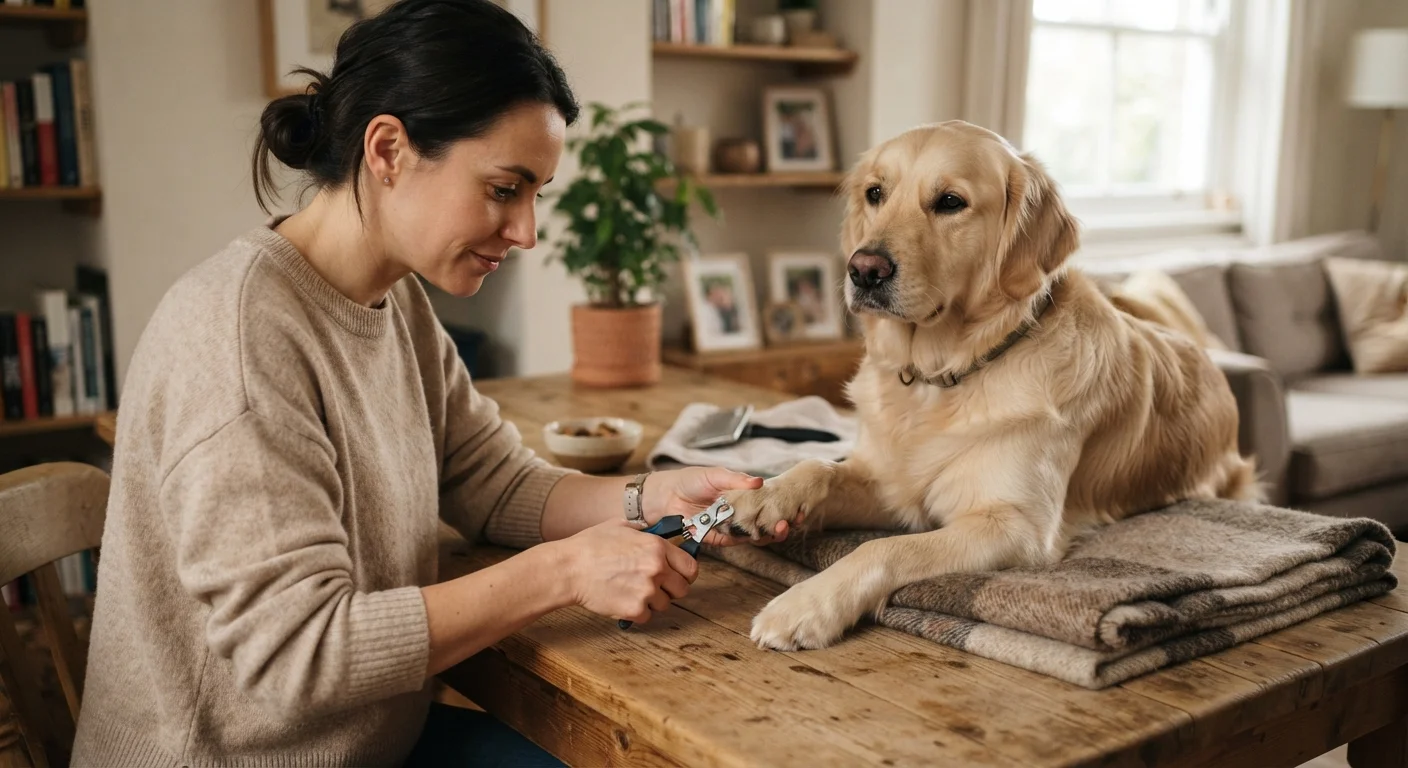
Nail trims are manageable with the correct clippers and some practice. Trimming too short risks cutting the quick, which causes pain and bleeding, so conservative, frequent trims are safer than infrequent deep cuts. Many pet owners find it helpful to watch a demonstration from their vet before trying alone.
Teeth brushing with a pet-formulated toothpaste can slow tartar buildup between professional dental cleanings. Human toothpaste contains ingredients toxic to pets, so using the right product matters.
Tasks that genuinely call for a professional
Some tasks look simple but carry enough risk that attempting them at home is not worth the potential cost, either to the pet or to the family budget.
Errors can cause injury or infection
Cutting a nail too short, introducing bacteria during ear cleaning, or using the wrong product on teeth can each cause harm that ends up requiring professional treatment.
Home assessment cannot replace diagnostic tools
Owners may miss early signs of disease that a vet would catch with a physical exam, blood work, or imaging, and delay can allow treatable conditions to progress.
Some tasks require training most owners do not have
Anal gland expression, dental scaling, wound care, and anything involving sedation or prescription medication are outside safe DIY territory regardless of the owner's confidence.
Inconsistent practice can be worse than no practice
An occasional nail trim that cuts the quick, or infrequent brushing that leaves mats undetected, can create more problems than a scheduled professional appointment would have.
Anal gland expression is one example. Some dogs need periodic manual expression of these glands, but improperly done it can cause rupture or infection. A vet or trained groomer should handle this.
Any task requiring sedation is firmly in veterinary territory. This includes deep dental cleaning (which needs anesthesia to be done safely and thoroughly), mass removal, and wound repair.
Diagnosing symptoms at home, even with good intentions, can delay care for conditions that worsen quickly. If a pet is lethargic, not eating, vomiting repeatedly, or showing signs of pain, a professional assessment is not optional. Our article on keeping vet bills manageable covers how to get that care without overpaying.
The real cost calculation
$50-$90
Typical professional grooming cost per session
Cost estimates for mid-size dog grooming sessions vary by region and service type, based on general industry ranges widely reported by veterinary and pet-care sources.
$300+
Average cost of a single dental extraction in dogs
The American Veterinary Dental College notes that dental disease is one of the most common preventable conditions in companion animals, with surgical intervention costs varying widely by case complexity.
Families sometimes avoid professional services entirely to save money, but that math often does not hold. A skin infection caught late because an ear was cleaned improperly can cost several times more to treat than a grooming appointment would have. The same logic applies to dental disease: skipping cleanings can lead to tooth extractions, which carry their own anesthesia and surgical costs.
The smarter calculation is to identify which tasks you can do safely and consistently, and protect your budget by doing those well. Tasks where error risk is high or where professional judgment is genuinely needed are not good candidates for DIY, regardless of the upfront savings.
Before a new pet arrives, walking through a budget readiness checklist can help families plan which grooming and wellness costs to keep professional and which to absorb at home.
When to call the vet without hesitation
Vomiting more than once in 24 hours, refusal to eat for more than a day, visible pain responses, unusual swelling, or any sudden change in behavior are signals to contact a veterinarian promptly. This article covers routine maintenance, not emergency or diagnostic situations. In those cases, waiting to save money on a visit carries more financial risk, not less.
Building a routine that actually sticks
The practical challenge with DIY pet care is consistency. A dog that gets brushed twice a year at home is not much better off than one that never gets brushed; regular short sessions are more useful than occasional thorough ones.
Starting young with any grooming habit, whether nail trims, ear cleaning, or tooth brushing, gives the pet time to adjust. For adult pets new to handling, gradual desensitization over several weeks tends to produce calmer cooperation than forcing the process.
Keeping a simple log of what you do and when makes it easier to notice changes in the pet's coat, nails, ears, or behavior over time. A consistent baseline is what lets you catch something early enough to matter. Nutrition plays into that baseline too: stable, appropriate diet affects coat quality, energy, and digestive health in ways that show up during grooming. Our piece on why cheap pet food isn't always a money-saver explains what to watch for on labels.
This article is for general informational purposes only and is not veterinary advice. Consult a licensed veterinarian for guidance specific to your pet's health and condition.