
Why wellness spending keeps rising without results
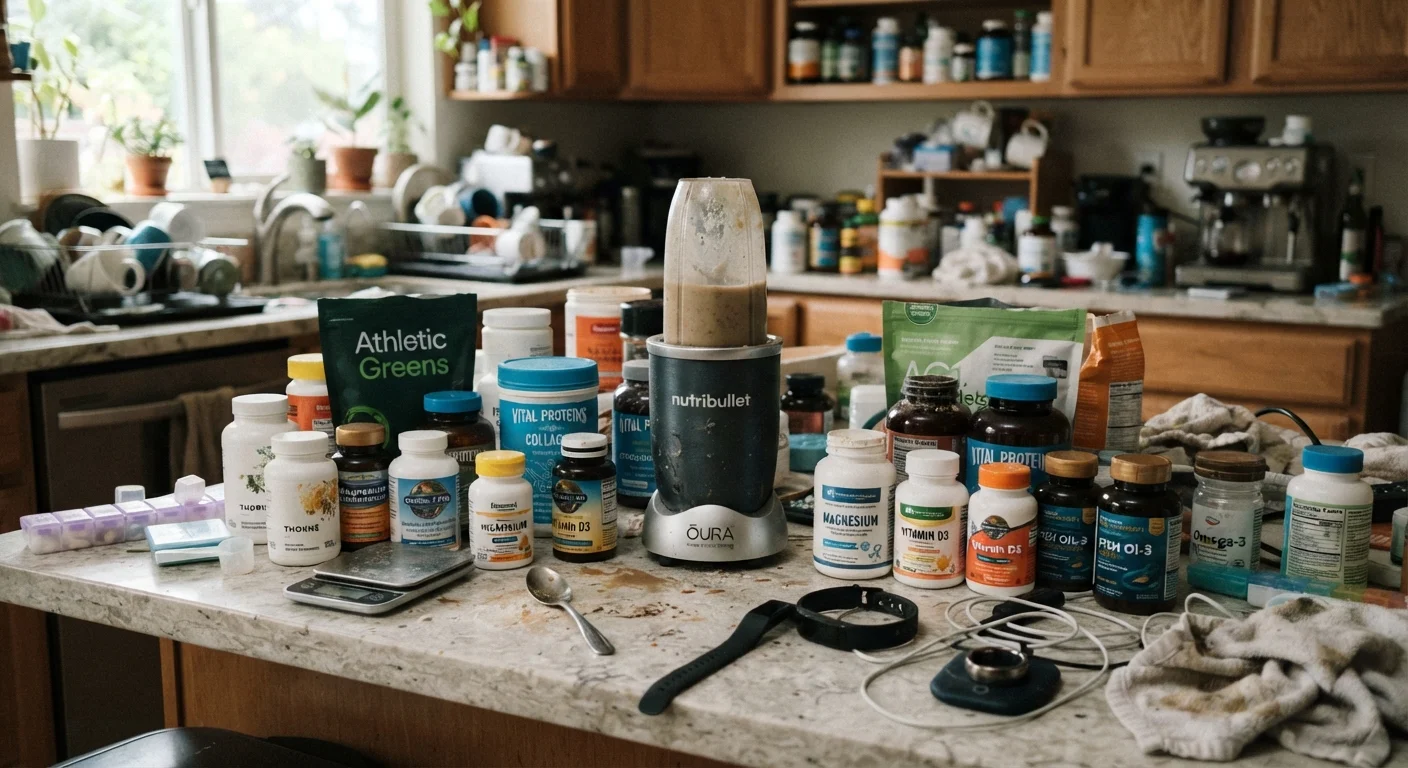
American families spend billions each year on supplements, fitness apps, wearable trackers, and specialty foods marketed as health-boosting. Yet population-level health measures have not improved in proportion to that spending. The gap between what wellness products cost and what they actually deliver is real, and it tends to widen when purchases are driven by marketing rather than need.
The wellness industry is designed to make inaction feel risky. A product labeled "immune support" or "metabolic boost" implies that skipping it puts health at risk. That framing pushes families toward purchases they would not make if they paused to ask: what is the specific mechanism, and is there credible evidence it works for healthy people? Most of the time, the honest answer is no.
This article is general health information, not medical advice. For questions about your family's specific health needs, consult a qualified healthcare provider.
Buying supplements without a confirmed deficiency or clinical need.
Why it happens: Supplement packaging uses health-adjacent language that implies broad benefit, and social media amplifies testimonials. Families assume that more nutrients equal better health.
Paying for multiple wellness app subscriptions that overlap in function.
Why it happens: Apps are easy to download during a motivated moment, and small monthly fees feel inconsequential. Over a year, three overlapping apps can cost as much as a full preventive care visit.
Treating expensive fitness equipment as a substitute for consistent movement habits.
Why it happens: A treadmill or home gym purchase feels like a commitment to health, but the equipment itself does nothing without regular use. The motivation spike that drove the purchase rarely sustains the routine.
Spending heavily on specialty health foods without examining whole-food alternatives.
Why it happens: Products labeled "superfood," "functional," or "fortified" carry a health halo that commands higher prices. Families assume the premium reflects nutritional superiority.
Using wearable health trackers as a passive data-collection habit rather than an action-driving tool.
Why it happens: Trackers are appealing because data feels like progress. Many users check daily metrics without connecting them to specific behavior changes.
What to do instead
Redirecting wellness spending starts with a spending audit. List every recurring wellness-related charge: apps, supplement subscriptions, meal kit add-ons. Cancel anything that has not changed a daily habit in the past three months. That money often covers a month of fresh produce or a copay for a preventive care visit.
Free and low-cost health tools have a stronger evidence base than most commercial wellness products. Consistent sleep is one example. Research on sleep and family wellbeing shows that regular, adequate rest affects immune function, weight regulation, and mood without any product purchase. Daily walking, cooking at home, and managing chronic stress carry similar profiles. For practical strategies on the stress side, see our guide on stress management on a tight budget.
Building habits before buying products is the cleaner order of operations. A structured family wellness routine built around sleep, movement, and nutrition costs very little. Products can supplement a solid foundation; they cannot replace one. Families also dealing with broader savings pressures may find it useful to read about why households struggle to save even when income rises, since wellness overspending is one piece of a larger pattern.
When a supplement or intervention genuinely seems warranted, talking to a doctor or registered dietitian first costs less than months of an ineffective product. Many preventive care visits are covered under standard insurance, and community health centers offer sliding-scale fees. Preventive habits done consistently reduce downstream medical costs far more reliably than any supplement stack.