
Why no-cost movement matters for family health
Physical activity is one of the most well-supported tools for long-term health, and it does not require a gym membership or a fitness budget. For families watching expenses, the gap between knowing that movement matters and making it happen regularly often comes down to perceived cost and complexity. The options below address both.
Staying consistently active also supports the preventive habits described in preventive health habits that reduce long-term medical costs. Regular movement is one of the most direct lifestyle levers families have for reducing the likelihood of expensive health issues over time.
A note on medical guidance
This article is general health information, not medical advice. Families with specific health conditions, injuries, or concerns about physical activity should consult a qualified healthcare provider before starting or changing a routine. This applies especially to children with chronic conditions and older adults.
Six ways to keep the whole family moving
Use public parks and trails as your gym
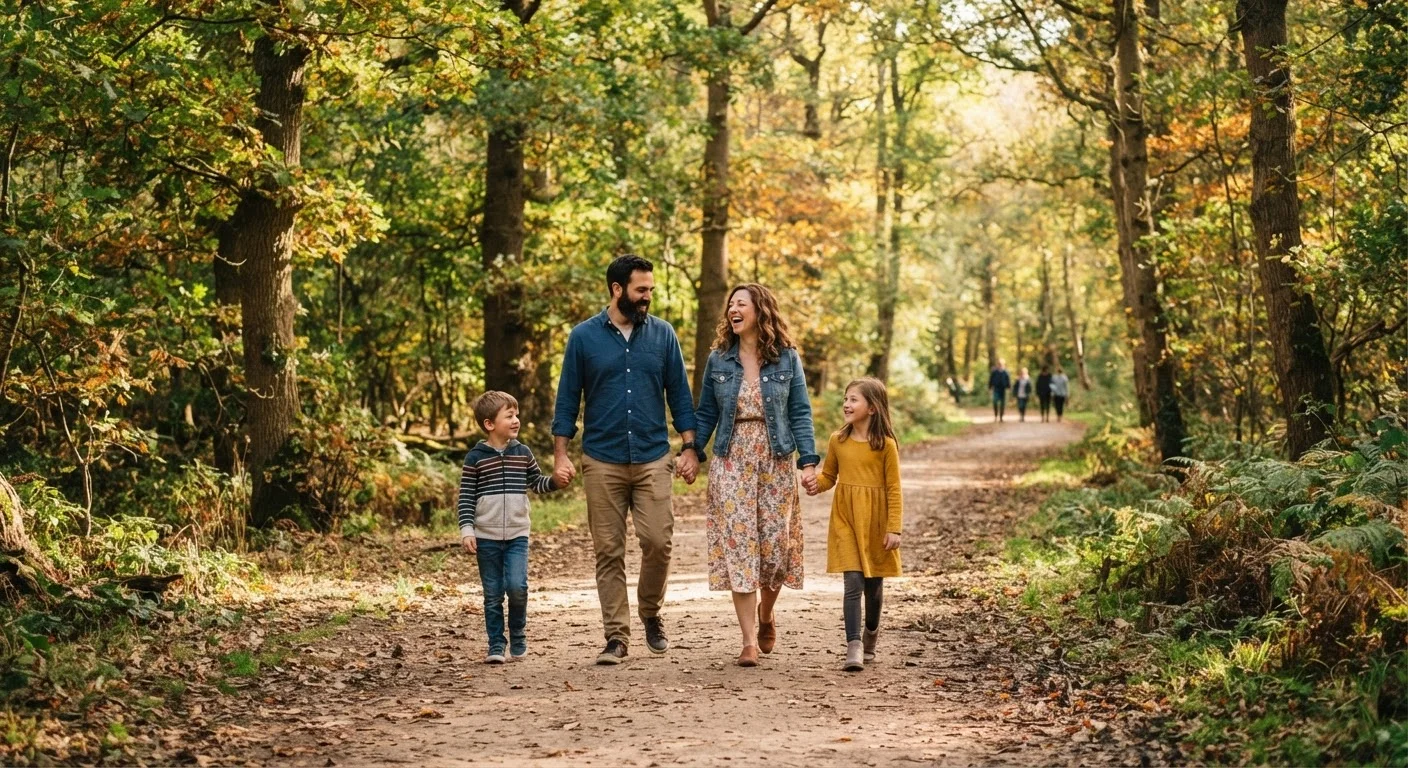
Public green spaces are among the most underused family fitness resources in the country. Trails, open fields, and playground structures support a wide range of activities: jogging, cycling, bodyweight exercises, and unstructured play. Many parks also have outdoor fitness stations with pull-up bars, balance beams, and stretching areas at no cost.
Planning regular park visits, even 20 to 30 minutes a few times per week, builds a routine without any financial barrier. If your family enjoys nature while staying active, the ranger programs and trails at national parks offer another layer of options on weekend trips.
Public parks offer trails, playgrounds, and outdoor fitness stations with no cost to families.
Check community recreation centers for low-cost programs
City and county recreation centers frequently run youth sports leagues, family swim nights, and group fitness classes at rates well below private gyms. Many operate on sliding-scale fee structures, meaning households that qualify based on income pay reduced rates or nothing at all. Calling your local parks and recreation department directly is the most reliable way to learn what assistance is available.
Libraries sometimes partner with recreation centers to offer free passes. School districts occasionally open facilities like gyms and tracks to the public outside of school hours, so it is worth asking your district office about community access policies.
Sliding-scale fees at recreation centers can make structured fitness programs genuinely affordable.
Stream free workouts from libraries and public platforms
A library card unlocks more than books. Many public library systems provide free access to fitness video platforms through digital services, covering yoga, dance, strength training, and kids' movement programs. YouTube also hosts a large volume of free, structured workout content from certified instructors, including family-friendly routines that require no equipment.
For families weighing whether a gym membership makes financial sense, the comparison of gym costs versus home exercise is worth reviewing. Free streaming options often cover the same movement variety without the monthly fee.
Library digital services give families free access to structured fitness video programs.
Build activity into daily routines rather than scheduling it separately
Walking to school, biking to errands, taking stairs, and doing yard work all count as physical activity. For families with packed schedules, weaving movement into existing tasks removes the need to carve out dedicated workout windows. Even 10-minute bursts of activity spread across the day accumulate meaningful health benefits over time, according to general guidance from public health organizations.
Turning chores into group activity, such as raking leaves or organizing the garage together, adds movement while getting something done. This approach fits naturally into a broader family wellness routine that does not depend on structured gym time.
Weaving movement into daily tasks removes the need to find extra time for exercise.
Organize neighborhood and community group activities
Informal neighborhood sports, group walks, and community cleanup events are free by nature and involve the whole family. Starting a weekly walking group with neighbors, organizing a pick-up basketball game at a local court, or joining a community garden all produce regular physical activity with built-in social accountability.
Many municipalities host free outdoor fitness events, seasonal races with no entry fee, and volunteer-run sports clinics. Checking local community boards, neighborhood apps, or city event calendars surfaces options that cost nothing to join. Movement built around community also supports stress reduction, which connects directly to the broader health picture covered in stress management on a tight budget.
Informal group activities like neighborhood walks create accountability and cost nothing.
Use secondhand and borrowed equipment to expand options at home
Jump ropes, resistance bands, hula hoops, and basic free weights are inexpensive secondhand and open up home-based movement for kids and adults. Thrift stores, neighborhood buy-nothing groups, and local online marketplaces regularly list gently used sports equipment. Borrowing from neighbors or family before purchasing anything reduces cost further.
Home-based activity does not require a dedicated room or expensive setup. A cleared living room floor and a few items from a secondhand source support a functional routine. For families thinking through the full picture of home exercise versus paid options, the gym vs. home exercise guide walks through the trade-offs in detail.
Secondhand equipment from thrift stores and community groups makes home fitness affordable.
Putting it into practice
None of these approaches requires a large upfront investment or a rigid schedule. Starting with one or two methods that fit your family's existing routine makes consistency more realistic than overhauling everything at once. Public parks, free digital resources, and daily movement habits form a solid foundation that can grow over time without growing in cost.
Families building out a fuller picture of wellness, including sleep, nutrition, and stress, can find a practical starting point in building a family wellness routine from the ground up.
This article is for general informational purposes only and does not constitute medical advice. Consult a qualified healthcare professional for guidance specific to your family's health needs.